
The Rules Changed on July 1, 2026
If you've been eyeing a coastal Rhode Island second home, the math shifted this summer. On July 1, 2026, RI's new Non-Owner Property Tax Act took effect, the first time the state has added a surcharge tied to non-primary, higher-value homes. It's manageable with planning, and it doesn't touch most homes, but it's the most important 2026 update for buyers coming from away.
First: The 2026 "Non-Owner" Second-Home Tax
Applies to homes assessed at $1M or more that are not a primary residence and not rented 183+ days a year. Surcharge = $2.50 per $500 of assessed value above $1M — so a $3M second home could see roughly $10,000/year on top of normal property taxes, indexed to inflation from 2027.
- Homes under $1M are not affected at all.
- Making it your primary residence (half the year) or renting it 183+ days changes how it's treated.
- Very plannable — model it before you buy at that price point.
The From-Away Buying Path
- Get oriented on towns and budget (Parts 1 & 2)
- Line up financing or proof of funds early
- Assemble your local team before you shop
- Tour efficiently — batch towns into 1–2 trips
- Understand coastal costs: taxes, flood insurance, maintenance
- Make a clean offer, manage inspections remotely
- Close remotely or in person

Step 1 — Financing: Second-home mortgages need larger down payments (10–20%+) and slightly higher rates; investment loans stricter; cash/asset-based buyers move fastest.
Step 2 — Local team: buyer's agent (us), a RI/MA real estate attorney (both are attorney-closing states), a coastal-savvy lender, and a flood/coastal insurance agent.
Step 3 — Tour efficiently: one well-planned visit can cover 2–3 towns; video tours fill the gaps.
Step 4 — Other coastal costs (full detail in our 10 FAQs post):
- Flood insurance: high-risk zones (AE, A, VE) with a federal mortgage generally need it to close — often $500–$1,100/yr statewide, more on the coast.
- Higher second-home insurance, often separate wind/hurricane coverage.
- Septic (not sewer) in many rural coastal towns — budget for inspection.
- Larger maintenance allowance — salt air is tough on homes.
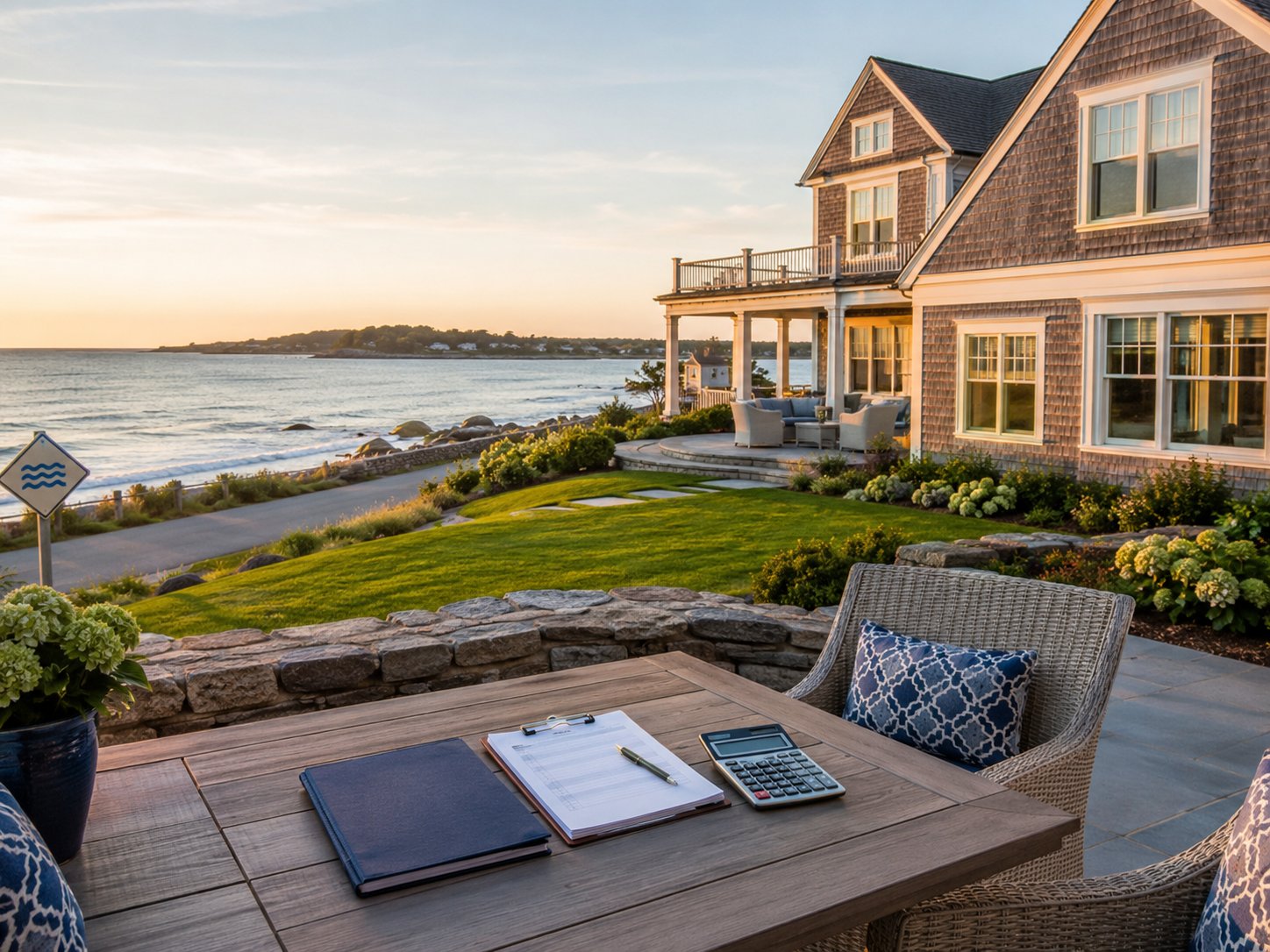
Step 5 — Clean offer, remote inspections: we handle remote offers/e-signatures, attend inspections with live video, and coordinate flood/septic/well inspections.
Step 6 — Closing: RI and MA both allow smooth remote closings via mail-away or mobile notary.
Bottom line: buying from out of state isn't harder — just different, and it goes smoothly with the right local team.
Tyler Cote — Cote Partners Realty
·(401) 307-3768
· Email us · Search · Buyer's Guide
(General info, not legal/tax/insurance advice — confirm current rules with licensed pros.)